 Fabo Company
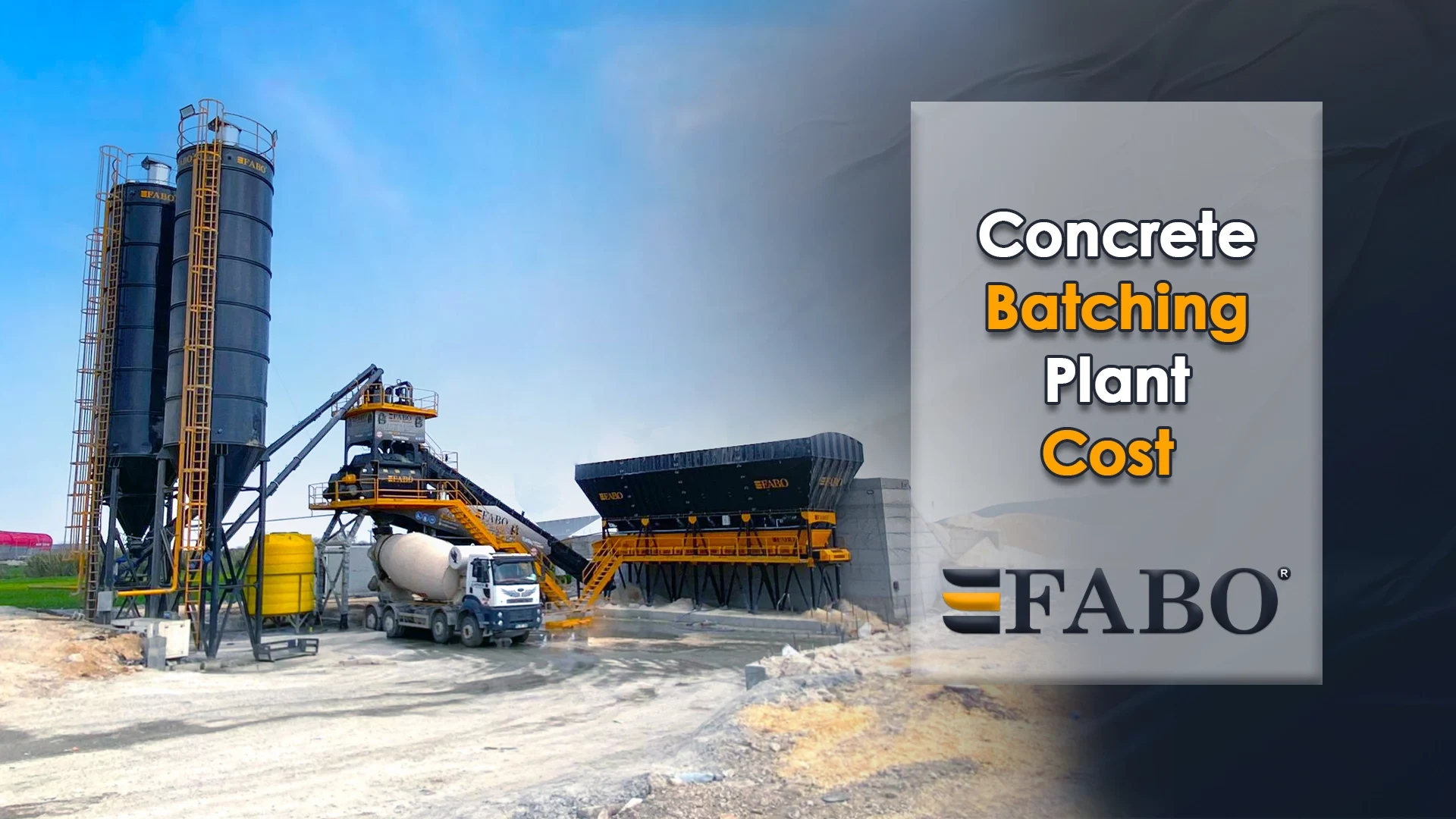
When planning a concrete production project, one of the first questions decision-makers ask is about Concrete Batching Plant Cost 2026. Yet in today’s construction and industrial environment, cost is no longer just about purchasing equipment. It is about how efficiently the plant operates, how reliable it is over time, and how well it supports long-term production goals. In 2026, concrete batching plants are expected to deliver consistent quality, high output, and smooth operation under demanding conditions. Buyers are therefore focusing more on total system value rather than short-term expenses.
Main Factors That Affect Concrete Batching Plant Cost in 2026
Several important elements directly influence Concrete Batching Plant Cost 2026, and understanding these factors helps create a more accurate investment plan.
One of the most influential factors is plant configuration. A compact batching plant designed for standard production needs is very different from a high-capacity or fully automated system. The number of aggregate bins, cement silos, mixers, and material handling components determines how complex the system will be.
Automation level also plays a significant role. Modern batching plants rely on advanced control systems to ensure accurate weighing, consistent mixing, and smooth production flow. While automation improves efficiency and reduces human error, it also shapes the overall system design and long-term operating structure.
Structural durability, material handling efficiency, and environmental control solutions further affect how a batching plant performs over its service life. Plants designed with these elements in mind tend to deliver stronger operational stability and better long-term value.
Concrete Batching Plant Cost Breakdown: Equipment, Installation, and Operation
To properly evaluate Concrete Batching Plant Cost 2026, it is important to look at the full system lifecycle rather than individual components.
Equipment investment includes mixers, aggregate storage systems, cement silos, conveyors, weighing units, and automation software. The quality of engineering and compatibility between components directly affects production reliability and system longevity.
Installation and commissioning cover site preparation, mechanical assembly, electrical connections, and performance testing. Plants designed with modular and pre-engineered structures usually allow faster installation and fewer on-site adjustments.
Operational costs become increasingly important over time. Energy efficiency, material accuracy, labor requirements, and daily production stability all determine how cost-effective the plant remains during continuous operation. A well-designed system helps reduce unplanned downtime and maintains consistent output.
Stationary vs Mobile Concrete Batching Plant Cost in 2026
Choosing between stationary and mobile systems is a common consideration when evaluating Concrete Batching Plant Cost 2026.
Mobile concrete batching plants are designed for flexibility. They are well suited for projects that require relocation or short-term production. Their compact structure and integrated design allow faster setup and easier transportation between job sites.
Stationary concrete batching plants are built for long-term, high-volume production. They provide greater customization options, larger storage capacity, and stable operation for continuous output. These systems are typically preferred where consistent production and long service life are critical.
The most suitable option depends on project duration, production targets, and operational priorities. Matching the plant type to actual project needs is key to achieving balanced investment efficiency.
How Production Capacity Influences Concrete Batching Plant Cost
Production capacity has a direct and measurable impact on Concrete Batching Plant Cost 2026. Higher-capacity plants require larger mixers, stronger structural frames, wider aggregate handling systems, and more advanced control technology.
As capacity increases, system coordination becomes more important. Accurate weighing, proper material flow, and consistent mixing performance must work together seamlessly. Achieving this level of balance requires precise engineering and careful system planning.
However, oversizing a batching plant can result in unnecessary investment and underutilized capacity. The most efficient solutions are designed around realistic production needs, with the ability to expand if future demand increases.
Operating and Maintenance Costs of Concrete Batching Plants in 2026
Long-term operating performance plays a major role in the overall concrete batching plant investment value.
In 2026, buyers place strong emphasis on energy efficiency and ease of maintenance. Plants equipped with optimized mixing systems, energy-efficient motors, and smart automation help reduce daily operational effort.
Maintenance requirements also affect long-term performance. Wear components such as mixer blades, liners, and conveyor parts require regular inspection. Systems designed with easy access points and standardized components make maintenance faster and reduce production interruptions.
Advanced monitoring systems further support preventive maintenance by identifying potential issues early and helping operators plan service activities more effectively.
Turnkey Concrete Batching Plant Solutions and Cost Efficiency
Turnkey solutions have become an increasingly popular approach when evaluating Concrete Batching Plant Cost 2026.
A turnkey concrete batching plant is delivered as a complete system, covering engineering, manufacturing, installation, and commissioning. This approach reduces coordination challenges and ensures that all components are designed to work together efficiently.
From a cost-efficiency perspective, turnkey solutions help prevent compatibility issues, reduce installation delays, and support smoother long-term operation. For many projects, this results in a more predictable and sustainable investment structure.
How FABO Global Optimizes Concrete Batching Plant Cost in 2026
FABO Company focuses on optimizing Concrete Batching Plant Cost 2026 through engineering-driven, project-specific solutions rather than one-size-fits-all systems.
Each plant is designed based on production requirements, material characteristics, and operational conditions. By delivering customized and turnkey batching plants, FABO Company ensures that every component contributes directly to efficiency and reliability.
Modular designs simplify installation and allow future upgrades without major structural changes. High-quality materials, energy-efficient systems, and advanced automation help reduce long-term operational effort and improve production stability.
With extensive global project experience and continuous technological development, FABO Company provides concrete batching plant solutions that balance performance, durability, and long-term investment value in 2026.