 Fabo Company
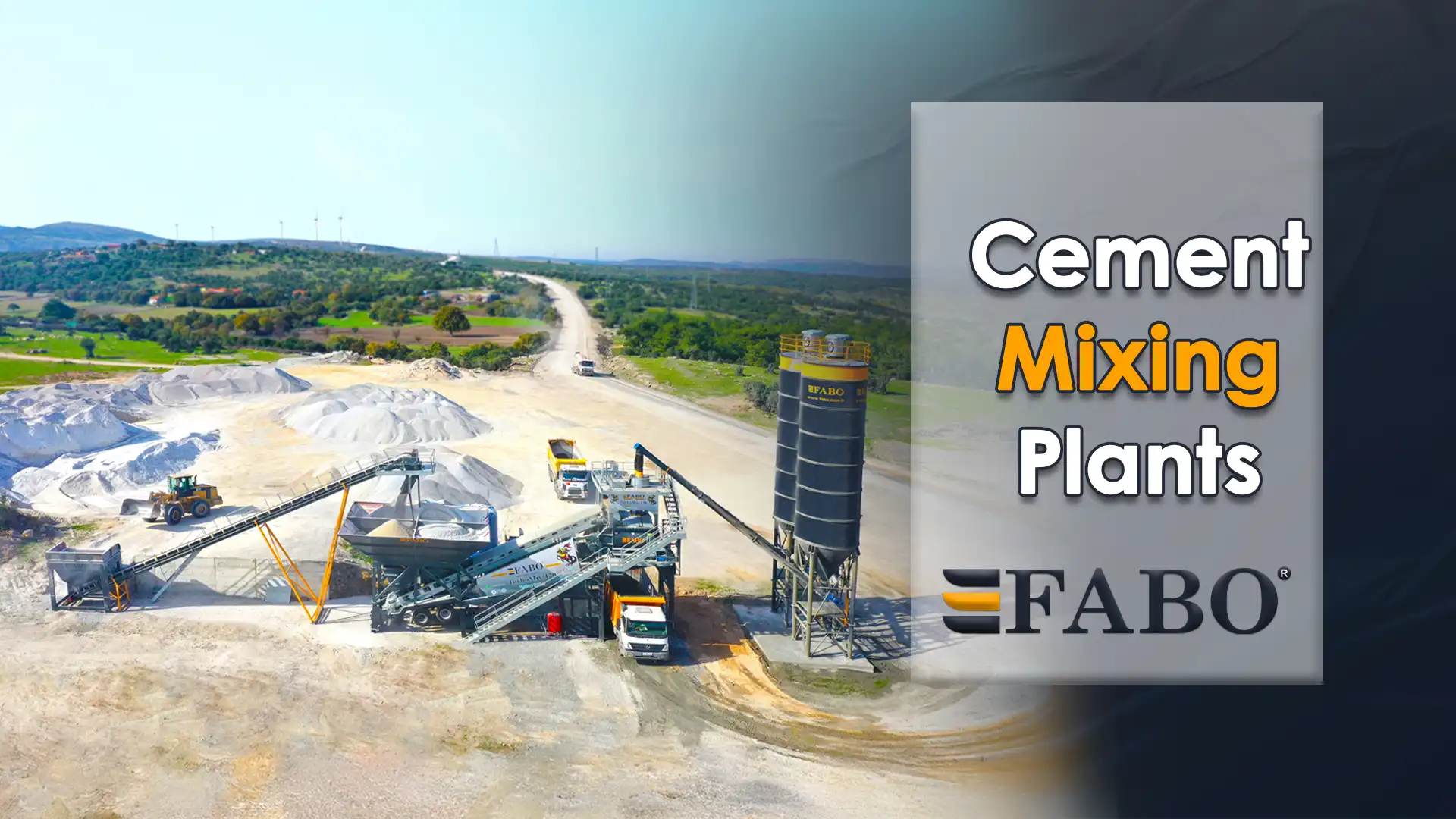
In construction, margins are tight and timelines are unforgiving. One delayed concrete delivery or one inconsistent batch can ripple through your entire project schedule. That’s why cement mixing plants are not just production units — they are strategic tools that give you control.
When you operate your own concrete batching system, you are no longer dependent on third-party suppliers, fluctuating delivery times, or inconsistent quality. You gain speed. You gain flexibility. Most importantly, you protect your profitability. If you are evaluating whether cement mixing plants are the right move for your business, this guide will walk you through the practical realities — from how they work to how they generate measurable returns.
What Are Cement Mixing Plants and How Do They Work?
Cement mixing plants are industrial systems designed to produce concrete by combining cement, aggregates, water, and chemical admixtures in precise ratios. While the concept sounds simple, the real value lies in precision and repeatability.
Every batch starts with carefully measured raw materials. Aggregates are transferred from storage bins, cement is fed from sealed silos, and water and additives are dosed automatically. These materials enter a high-performance mixer, where they are blended into uniform, high-strength concrete. Within minutes, the finished product is discharged and ready for transport.
Modern cement mixing plants rely on advanced automation systems. Operators can store multiple mix designs, monitor moisture levels in real time, and adjust production instantly. This level of control ensures consistent quality — something every contractor understands is critical for structural integrity and client satisfaction.
Key Components of Modern Cement Mixing Plants
Behind every reliable batch of concrete is a system engineered for durability and accuracy. The performance of cement mixing plants depends on several core components working in harmony. Aggregate bins store and regulate different material sizes. Cement silos protect powdered materials from moisture and contamination. The mixer — often a twin-shaft or planetary system — ensures homogenous blending even at high capacities. Precision weighing systems guarantee exact proportions, while the automation panel manages recipes, reporting, and operational data.
What makes the difference in long-term performance is not just the presence of these components, but their quality. Wear-resistant mixer blades, reinforced steel structures, and reliable control software directly impact uptime and maintenance costs.
Types of Cement Mixing Plants: Mobile vs. Stationary Systems
Not every project requires the same solution. Choosing between mobile and stationary cement mixing plants should be based on your operational strategy, not just your current project. Mobile systems are ideal when flexibility matters. If your projects change locations frequently or you work on infrastructure developments that move in phases, mobility can reduce logistical challenges. These plants are designed for faster installation and easier transport, helping you start production quickly wherever the work takes you.
Stationary systems, on the other hand, are built for long-term, high-volume production. If your company supplies concrete continuously to multiple projects or operates in a fixed industrial zone, stationary cement mixing plants provide greater capacity and operational stability. They are optimized for heavy-duty performance and sustained output.
How to Choose the Right Cement Mixing Plant for Your Project
Selecting cement mixing plants is not just a technical decision — it is a financial one. The wrong capacity or configuration can limit your growth or inflate your operating costs. Start by evaluating your average and peak production needs. A plant that is too small can create bottlenecks; one that is too large can increase unnecessary energy and maintenance expenses.
Consider the physical conditions of your site. Available space, material logistics, and foundation requirements all influence installation efficiency. Automation level is another critical factor. Higher automation reduces human error and ensures consistent output, especially in large-scale operations. Most importantly, think beyond the purchase price. Evaluate lifecycle costs, energy consumption, spare parts availability, and service support. The best cement mixing plants are those that deliver sustainable performance — not just short-term output.
Benefits of Automated Cement Mixing Plants in Large-Scale Construction
Automation is where cement mixing plants truly become profit centers. In large construction projects, even small inconsistencies can lead to structural issues, rework, and financial losses. Automated systems reduce these risks by maintaining precise control over every batch. Consistent quality strengthens your reputation and builds trust with clients. Speed is another advantage. Optimized mixing cycles increase daily production capacity without sacrificing quality. Faster output means faster project completion — and faster payments.
Automation also lowers labor dependency. With digital monitoring and reporting systems, fewer operators are needed to manage production. Real-time data allows immediate problem detection, preventing minor issues from turning into costly shutdowns. For companies handling high-volume concrete production, automated cement mixing plants offer measurable improvements in efficiency, reliability, and profit margins.
Cement Mixing Plant Investment Cost and Return on Investment (ROI)
It is natural to focus on initial investment costs. Cement mixing plants represent a significant capital decision. However, the real question is not how much they cost — it is how much they return. Owning your own plant eliminates reliance on external concrete suppliers. You gain control over pricing, scheduling, and quality standards. Transportation costs decrease, and production delays caused by supply shortages are minimized.
Return on investment typically comes from several areas:
- Reduced concrete purchasing expenses
- Lower transportation and logistics costs
- Improved project scheduling and faster completion
- Greater pricing flexibility in competitive bids
When production volumes are steady, many businesses recover their investment within a relatively short operational period. Beyond that point, the plant becomes a direct contributor to profit. Cement mixing plants are not just operational assets; they are long-term revenue generators.
Cement Mixing Plant Installation and Setup Process
The performance of cement mixing plants begins with proper installation. Even the most advanced system can underperform if setup is rushed or poorly executed. Installation typically starts with site preparation and foundation work. Structural components are assembled, followed by mechanical and electrical integration. Automation systems are calibrated to ensure precise dosing and mixing. Before full-scale production begins, trial batches are tested to verify performance and consistency.
Working with experienced technical teams during installation reduces the risk of alignment errors and premature wear. A well-installed plant operates more efficiently, requires fewer adjustments, and delivers stable production from day one.
Common Problems in Cement Mixing Plants and How to Prevent Them
Like any industrial system, cement mixing plants require attention and preventive care. Most operational problems are not sudden — they are gradual and avoidable. Inconsistent concrete quality often stems from inaccurate calibration or moisture fluctuations in aggregates. Regular system checks and sensor monitoring prevent this issue. Mixer blade wear is another common challenge in high-capacity operations. Using durable components and maintaining scheduled inspections significantly extends service life.
Dust management is critical for both environmental compliance and equipment longevity. Properly maintained filtration systems protect both workers and machinery. Additionally, keeping control software updated ensures reliable data accuracy and reduces unexpected disruptions.
Final Thoughts: Build Control, Build Profit
In a competitive construction market, control equals power. Cement mixing plants give you control over quality, timelines, costs, and ultimately, your reputation. Instead of depending on external suppliers, you produce concrete on your terms. Instead of reacting to delays, you set the schedule. Instead of accepting variable quality, you deliver consistent results.
If your goal is to scale operations, increase margins, and strengthen your competitive position, investing in high-performance cement mixing plants can be one of the most strategic decisions you make. The right plant does more than mix concrete — it builds confidence, reliability, and long-term growth for your business.