 Fabo Company
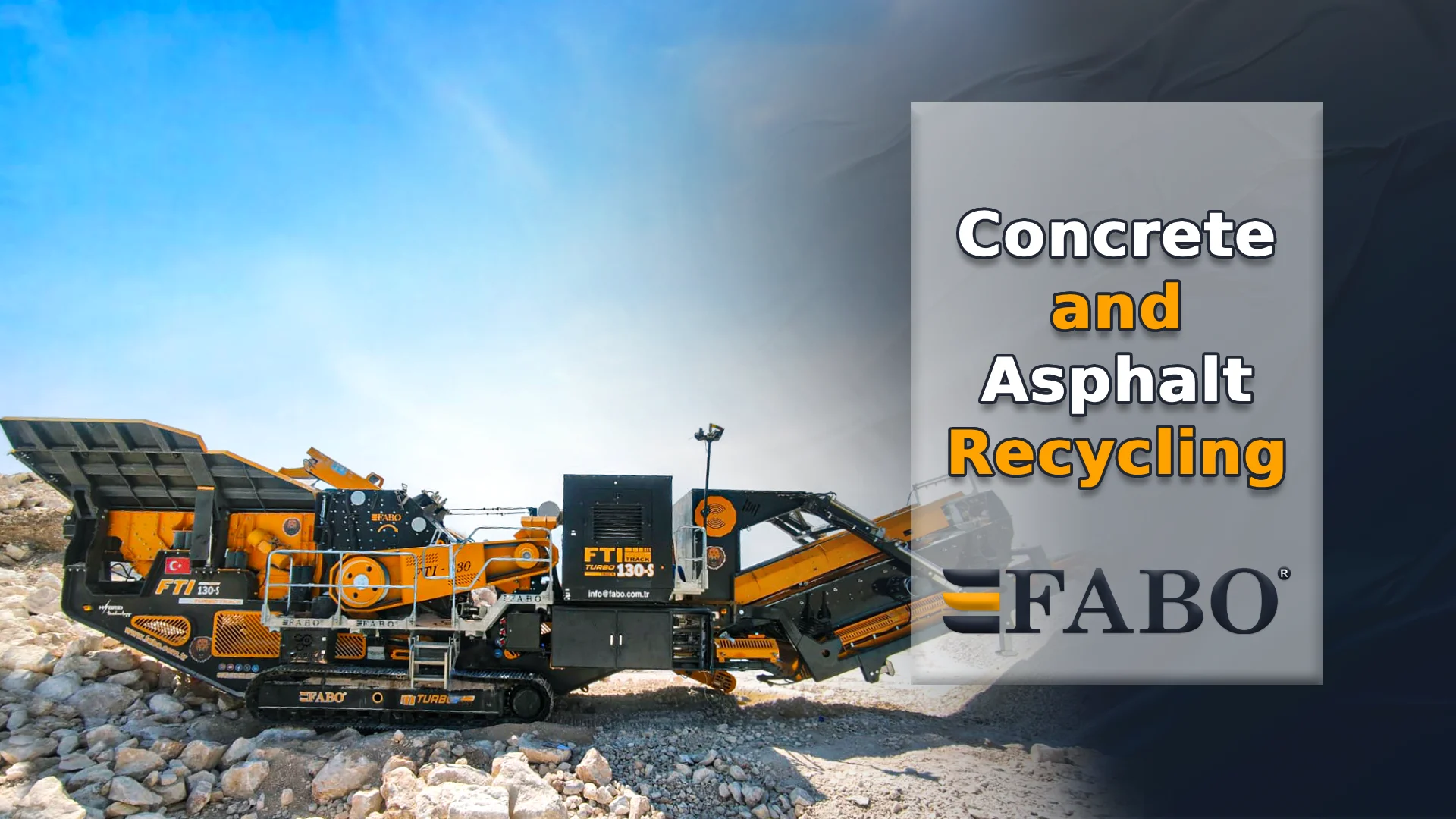
The construction and demolition industry generates millions of tons of waste materials every year. Traditionally, much of this waste ended up in landfills, creating environmental concerns and increasing project costs. Today, however, concrete and asphalt recycling has become a practical and profitable solution for construction companies, contractors, site managers, and investors seeking greater efficiency and sustainability.
Modern crushing and screening technologies make it possible to transform demolished concrete and reclaimed asphalt into valuable aggregates that can be reused in new construction projects. This approach not only reduces waste disposal requirements but also decreases the need for virgin raw materials, helping businesses improve profitability while supporting environmental goals.
As infrastructure development continues to expand worldwide, concrete and asphalt recycling is becoming an essential component of efficient aggregate production and resource management. With advanced recycling systems, companies can convert waste into a valuable asset while maintaining high-quality material standards.
Importance of Concrete and Asphalt Recycling
Concrete and asphalt recycling is the process of collecting, crushing, screening, and reprocessing construction and demolition waste materials into reusable aggregates and paving materials.
Instead of transporting demolished materials to disposal sites, recycling operations recover valuable resources that can be reintroduced into construction projects.
This process typically involves:
- Material collection
- Primary crushing
- Secondary crushing
- Screening and classification
- Metal separation
- Stockpiling recycled products
The increasing demand for sustainable construction practices has made concrete and asphalt recycling a key strategy for reducing environmental impact while improving operational efficiency.
Why Is Recycling Important?
The benefits extend beyond environmental responsibility.
Recycling helps organizations:
- Reduce landfill dependency
- Lower transportation costs
- Decrease raw material consumption
- Improve resource utilization
- Support sustainable construction initiatives
- Generate additional revenue from recovered materials
For contractors and project developers, recycling often transforms what was once considered waste into a valuable source of construction aggregates.
How Does the Concrete and Asphalt Recycling Process Work?
The recycling process begins when demolition materials are transported to a recycling facility or processed directly on-site using a mobile crushing plant.
Step 1: Material Collection
Concrete debris, asphalt pavement, and demolition waste are gathered from construction sites.
Step 2: Primary Crushing
Large material pieces are reduced in size using jaw crushers or impact crushers.
Step 3: Metal Separation
Magnetic separators remove reinforcing steel and other metal contaminants.
Step 4: Secondary Crushing
Additional crushing stages improve particle shape and achieve desired aggregate sizes.
Step 5: Screening
Screening systems classify materials according to specific size requirements.
Step 6: Final Product Storage
Processed materials are stockpiled for future use in construction and infrastructure projects.
Modern crushing systems can efficiently handle high-capacity recycling operations while maintaining consistent product quality.
Materials That Can Be Recovered Through Concrete and Asphalt Recycling
Many valuable materials can be recovered during recycling operations.
Recyclable Concrete Materials
- Reinforced concrete
- Building foundations
- Bridge demolition waste
- Concrete slabs
- Sidewalk materials
Recyclable Asphalt Materials
- Reclaimed Asphalt Pavement (RAP)
- Road resurfacing materials
- Asphalt millings
- Highway rehabilitation waste
Additional Recoverable Materials
- Steel reinforcement bars
- Aggregates
- Sand and fines
- Base course materials
These recovered resources can often replace virgin materials in various applications, reducing production costs and environmental impact.
Key Benefits of Recycling Concrete and Asphalt
Reduced Material Costs
One of the most significant advantages of concrete and asphalt recycling is the reduction in raw material expenses.
Recycled aggregates can often replace newly quarried materials, lowering procurement costs while maintaining project performance requirements.
Improved Sustainability
Recycling reduces demand for natural resources and minimizes landfill usage.
Environmental benefits include:
- Lower carbon emissions
- Reduced quarrying activity
- Less transportation fuel consumption
- Conservation of natural aggregates
Increased Operational Efficiency
Companies can process demolition waste directly on-site using a mobile crushing plant, eliminating unnecessary transportation and disposal activities.
Better Resource Management
Recovered materials can be reused multiple times, creating a circular economy within the construction industry.
Faster Project Execution
On-site recycling allows contractors to maintain continuous material availability without waiting for external aggregate deliveries.
Reducing Construction Waste Through Recycling Solutions
Construction waste management has become a critical challenge for modern infrastructure projects.
Without proper recycling strategies, demolition materials consume valuable landfill space and create significant disposal expenses.
Modern recycling solutions help organizations:
- Minimize waste generation
- Improve site sustainability
- Comply with environmental regulations
- Reduce transportation requirements
- Increase material recovery rates
Mobile recycling systems are particularly valuable for large-scale demolition projects where transportation logistics can significantly impact project costs.
For many contractors, recycling is no longer simply an environmental initiative—it has become a practical business strategy.
How Recycled Concrete Aggregate Is Used in New Projects
Recycled Concrete Aggregate (RCA) is produced by crushing and processing demolished concrete into reusable aggregate materials.
Common Applications
RCA is widely used for:
- Road base construction
- Highway sub-base layers
- Drainage systems
- Industrial flooring
- Foundation backfill
- Pavement construction
Performance Benefits
Properly processed RCA can provide:
- Excellent load-bearing capacity
- Reliable compaction characteristics
- Reduced material costs
- Sustainable construction performance
When produced using high-quality crushing and screening equipment, recycled aggregates can meet demanding engineering specifications.
Mobile Crushing and Screening Plants for Recycling Operations
A mobile crushing plant offers flexibility that stationary systems cannot always provide.
Instead of transporting waste materials to a central facility, operators can process materials directly at the demolition site.
Advantages include:
- Reduced transportation costs
- Faster project completion
- Lower fuel consumption
- Increased operational flexibility
- Immediate material reuse
Mobile vs. Stationary Recycling Systems
| Feature | Mobile Crushing Plant | Stationary Crusher |
|---|---|---|
| Mobility | High | Low |
| Installation Time | Minimal | Longer |
| Site Flexibility | Excellent | Limited |
| Transportation Costs | Lower | Higher |
| Large-Scale Continuous Production | Moderate to High | Very High |
The choice depends on project duration, production targets, and site conditions.
As a trusted global manufacturer, FABO Company develops advanced mobile crushing plant and stationary crusher solutions designed to support efficient recycling and aggregate production operations worldwide.
Challenges in Concrete and Asphalt Recycling and How to Overcome Them
Although recycling offers substantial benefits, operators may encounter several challenges.
Material Contamination
Contaminants such as wood, plastics, and metals can reduce final product quality.
Solution:
- Advanced screening systems
- Magnetic separators
- Effective material inspection procedures
Variable Feed Material
Demolition waste often varies significantly in composition.
Solution:
- Adjustable crusher settings
- Multi-stage crushing systems
- Flexible screening configurations
Product Quality Consistency
Maintaining uniform aggregate quality is essential.
Solution:
- Automated process control
- High-performance crushing equipment
- Regular quality monitoring
Operational Downtime
Equipment reliability directly affects productivity.
Solution:
- Preventive maintenance programs
- Durable machinery components
- Professional technical support
Choosing the Right Recycling Equipment for Maximum Efficiency
Selecting the right equipment is one of the most important decisions for recycling operations.
Factors to Consider
Material Type
Different crushers perform better with different materials.
- Jaw crushers for primary reduction
- Impact crushers for superior aggregate shape
- Cone crushers for specific secondary applications
Production Capacity
Equipment should match project requirements without creating bottlenecks.
Mobility Requirements
A mobile crushing plant is ideal for changing project locations, while a stationary crusher may be more suitable for permanent facilities.
Screening Efficiency
High-quality screening systems improve product consistency and maximize material recovery.
Long-Term ROI
Investors should evaluate:
- Fuel efficiency
- Maintenance requirements
- Wear part costs
- Equipment lifespan
- Productivity performance
Common Equipment Selection Mistakes
Avoid these common errors:
- Choosing equipment based solely on initial investment
- Ignoring future capacity requirements
- Underestimating maintenance needs
- Overlooking mobility requirements
- Selecting inadequate screening systems
The most successful recycling operations focus on total lifecycle value rather than short-term savings.
Investment Perspective and Operational Benefits
For construction companies and investors, concrete and asphalt recycling represents more than a sustainability initiative.
It is a long-term operational strategy that can improve profitability through:
- Reduced material purchasing costs
- Lower transportation expenses
- Increased project efficiency
- Improved waste management
- Enhanced resource utilization
Modern crushing and screening technologies allow businesses to convert waste streams into revenue-generating resources while supporting environmental objectives.
Companies that integrate recycling into their aggregate production processes often gain a competitive advantage through improved cost control and operational flexibility.