 Fabo Company
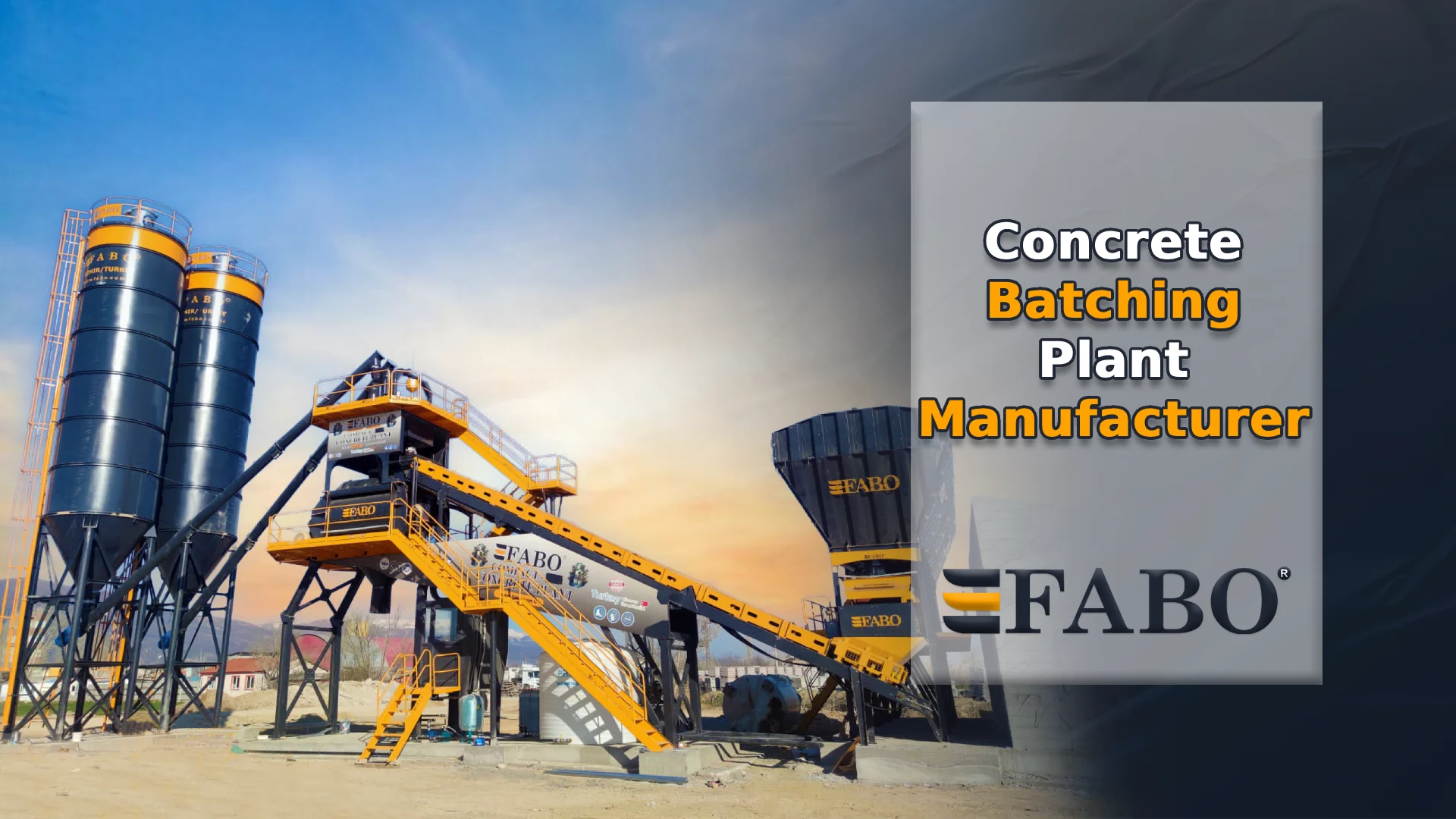
Choosing the right Concrete Batching Plant Manufacturer is one of the most important investment decisions for construction companies, contractors, infrastructure developers, mining operators and concrete producers. A batching plant is not only a machine; it is the production center of a project. Its capacity, automation level, mixer type, aggregate feeding system and durability directly affect concrete quality, operating cost, project speed and long-term profitability.
In global markets such as Europe, the USA and Africa, buyers face different challenges. European projects often require high environmental compliance and automation. The USA demands productivity, reliability and strong service support. African markets frequently prioritize durability, easy maintenance and efficient aggregate production under demanding site conditions. For this reason, selecting a technology-driven and export-oriented manufacturer such as FABO Company becomes a strategic advantage for businesses that want stable production, lower downtime and better return on investment.
How to Choose the Right Concrete Batching Plant Manufacturer for Your Project
A reliable Concrete Batching Plant Manufacturer should be evaluated according to engineering capability, production quality, plant configuration flexibility and after-sales service. The right manufacturer does not only supply equipment; it analyzes your project requirements and recommends the most efficient solution.
Key criteria to evaluate before choosing a manufacturer
- Production capacity: The plant must match your hourly concrete demand without unnecessary energy consumption.
- Mixer type: Twin shaft, pan and planetary mixers serve different concrete applications.
- Aggregate feeding system: Skip hoist and belt conveyor systems affect plant speed, footprint and efficiency.
- Automation level: PLC-based control systems improve accuracy, reporting and repeatability.
- Structural strength: Heavy-duty chassis, wear-resistant components and high-quality steel increase service life.
- Spare parts availability: Fast parts supply reduces downtime.
- Export experience: Global manufacturers understand voltage standards, transport requirements and regional regulations.
A professional Concrete Batching Plant Manufacturer should ask questions about your project before offering a plant. These questions include required concrete output, aggregate type, cement silo capacity, site layout, climate conditions, mobility requirements and future expansion plans.
What Makes a World-Class Concrete Batching Plant Manufacturer Different?
The working principle of a Stone Crusher Machine is relatively straightforward but highly engineered.
Material Feeding
Raw material enters the crusher through feeders or hoppers designed to regulate material flow.
Crushing Stage
Mechanical forces such as compression, impact, or attrition break the material into smaller particles.
Screening Process
Crushed material passes through screening systems where particles are classified according to size specifications.
Recirculation and Optimization
Oversized materials are returned to the crusher for further reduction, ensuring maximum efficiency and product consistency.
Factors Affecting Crushing Performance
Several variables influence production performance:
- Material hardness
- Moisture content
- Feed size
- Crusher configuration
- Screen efficiency
- Operator expertise
- Automation level
Modern plants increasingly rely on automated control systems to optimize these variables in real time.
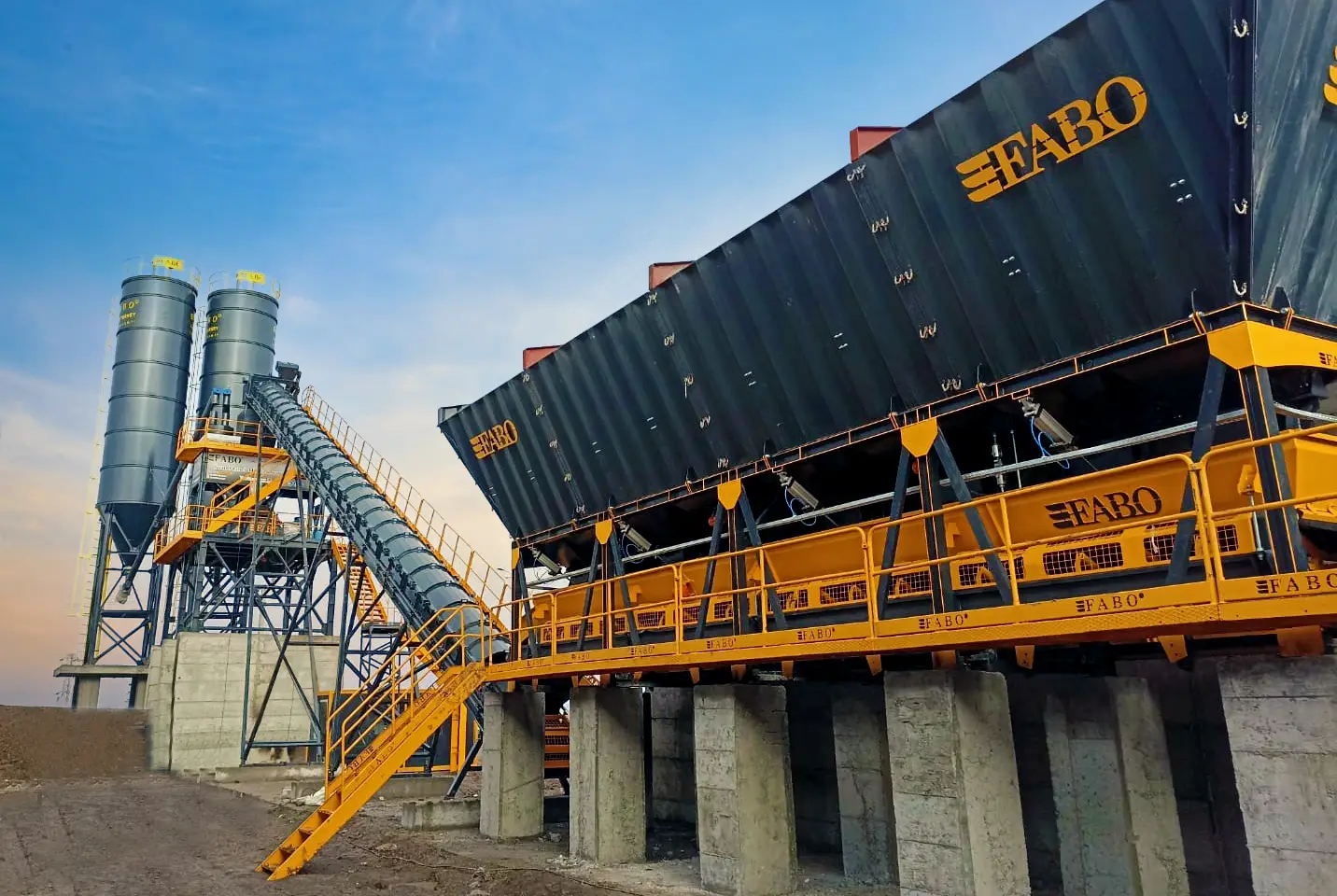
Stationary vs Mobile Concrete Batching Plants: Which Solution Delivers Better ROI?
One of the most common buyer questions is whether to invest in a stationary or mobile concrete batching plant. Both options can deliver strong ROI, but the right choice depends on project duration, site conditions, capacity needs and relocation frequency.
Stationary concrete batching plants
Stationary plants are designed for long-term, high-volume concrete production. They are widely used in ready-mix concrete facilities, infrastructure projects, precast production and large construction zones.
Advantages
- Higher production capacity
- Stronger structural design
- Suitable for continuous operation
- More silo, aggregate bunker and mixer configuration options
- Ideal for permanent facilities
Disadvantages
- Requires more installation space
- Longer installation time compared to mobile models
- Less flexible for projects requiring relocation
Mobile concrete batching plants
Mobile plants are designed for fast installation, easy transportation and flexible project use. They are suitable for contractors working on different sites or temporary infrastructure projects.
Advantages
- Quick installation
- Easy transportation
- Lower civil work requirement
- Flexible use across multiple job sites
- Strong option for remote projects
Disadvantages
- Capacity may be lower than large stationary models
- Aggregate storage volume can be more limited
- Not always ideal for very high continuous production
Why FABO Is the Trusted Concrete Batching Plant Manufacturer for Europe, the USA and Africa
FABO Company is positioned as a trusted Concrete Batching Plant Manufacturer for global markets because it combines production capability, export experience and practical engineering knowledge. The company serves customers that need durable and efficient machinery for construction, concrete production, quarrying, mining and recycling applications.
Why global buyers prefer FABO solutions
FABO’s strength comes from its ability to offer machinery that fits different markets and operating conditions. In Europe, customers often focus on efficiency, automation and environmental performance. In the USA, productivity, reliability and operational continuity are key priorities. In Africa, durability, easy maintenance and adaptability to difficult site conditions are essential.
FABO supports these expectations with:
- Mobile and stationary concrete batching plant options
- Crushing and screening equipment for aggregate production
- Heavy-duty designs for demanding working environments
- Export-oriented production experience
- Practical plant configurations for different capacities
- Solutions for contractors, quarry owners, concrete producers and mining operators
FABO should not be seen only as a machinery seller. For many buyers, the company acts as a solution partner that helps connect raw material processing with concrete production. This is especially valuable when a project requires both a stationary crusher or mobile crushing plant and a concrete batching plant.
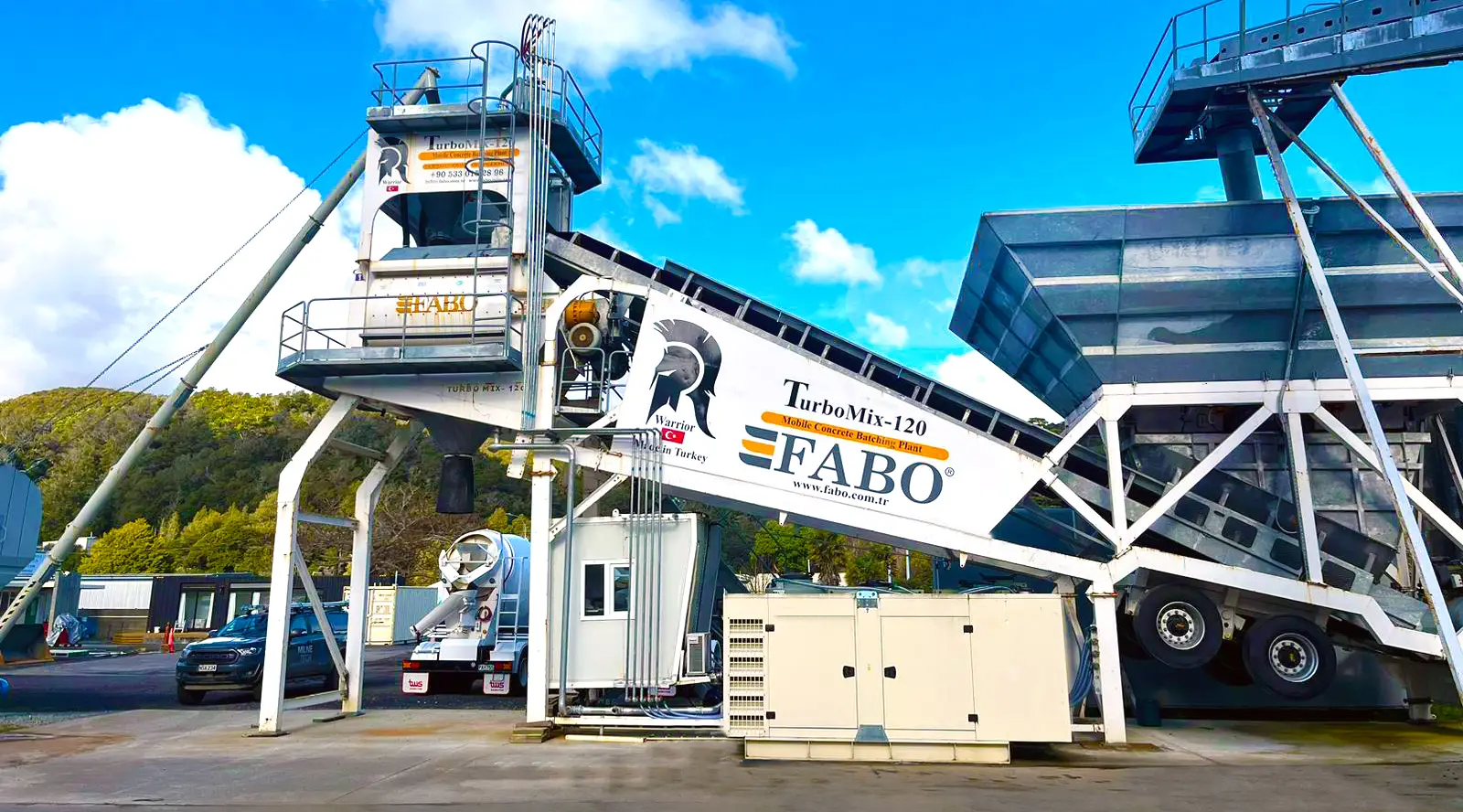
How to Select the Ideal Concrete Batching Plant Capacity Based on Production Requirements
Selecting the correct capacity is critical for operational efficiency. A plant that is too small creates bottlenecks. A plant that is too large may increase energy use, investment burden and maintenance costs.
What does batching plant capacity mean?
Concrete batching plant capacity refers to the amount of fresh concrete the plant can produce per hour under defined operating conditions. It is usually expressed in cubic meters per hour.
Factors that affect required capacity
Before choosing capacity, buyers should analyze:
- Daily concrete demand
- Peak production periods
- Truck mixer availability
- Aggregate moisture level
- Mixer size and cycle time
- Distance between plant and pouring area
- Project duration
- Future expansion plans
For example, a small contractor may need a compact mobile plant for flexible site use. A ready-mix concrete producer may require a higher-capacity stationary plant for continuous commercial supply. A mining or quarry company may combine aggregate production equipment with a batching plant to support infrastructure and internal construction needs.
Which Industries Benefit Most from Modern Concrete Batching Plants?
Modern concrete batching plants are used across many industries because concrete is essential for infrastructure, industrial construction and commercial development.
Construction companies
Construction firms use batching plants to control concrete quality, reduce dependence on external suppliers and improve project scheduling. On-site production can be especially useful for large residential, commercial and industrial projects.
Infrastructure contractors
Roads, bridges, airports, tunnels, ports and rail projects require consistent concrete supply. A reliable concrete batching plant helps contractors reduce delays and maintain quality standards throughout the project.
Ready-mix concrete producers
Ready-mix companies need plants that deliver repeatable quality, accurate weighing and high hourly output. Automation, recipe management and reporting features are especially important in this sector.
Quarry and aggregate producers
Quarry owners can create additional value by converting their aggregates into ready-mix concrete. When crushing and screening systems are integrated with a batching plant, aggregate production becomes part of a profitable concrete supply chain.
Mining operators
Mining sites often require concrete for foundations, roads, tunnels, drainage channels and industrial structures. Durable plants supported by strong mining equipment knowledge can help operators produce concrete in remote and demanding environments.
Recycling facilities
Recycling plants can process construction waste and use suitable recycled aggregates in concrete production depending on project standards and regulations. This supports circular economy goals and reduces material waste.
Investment Insight: How a Concrete Batching Plant Improves ROI
A concrete batching plant creates ROI by improving control over production, reducing dependency on external suppliers and increasing project speed.
Main ROI drivers
- Lower concrete supply risk
- Better production scheduling
- Reduced material waste
- Improved concrete quality
- Faster project execution
- Higher equipment utilization
- Ability to serve multiple projects
- Potential to sell concrete commercially
For quarry and aggregate producers, ROI can be even stronger. By combining aggregate production with concrete batching, businesses can move higher in the value chain. Instead of selling only raw aggregates, they can produce ready-mix concrete and increase revenue potential.
FABO’s integrated machinery portfolio supports this strategy because the company manufactures solutions for crushing, screening and concrete production. This makes it easier for investors to build a connected and efficient material processing system.
How to Choose the Best Solution for Your Region
Different markets require different plant configurations. A good Concrete Batching Plant Manufacturer should understand regional expectations.
Europe
European buyers generally prioritize automation, environmental compliance, compact design, energy efficiency and high-quality production standards.
USA
The USA market requires high productivity, durable components, strong service support and reliable operation for demanding construction schedules.
Africa
African projects often need robust plants that can operate in tough site conditions, with easy maintenance and flexible configurations for infrastructure, mining and remote construction projects.
Middle East and Asia-Pacific
Hot climates, large infrastructure projects and high-volume concrete demand make durability, cooling options, capacity and automation particularly important.